Webhooks & Calendar Integrations
Sync task due dates with external calendars and bridge Syncupp with thousands of external apps via Zapier, Make, and webhook endpoints.
app.syncupp.com
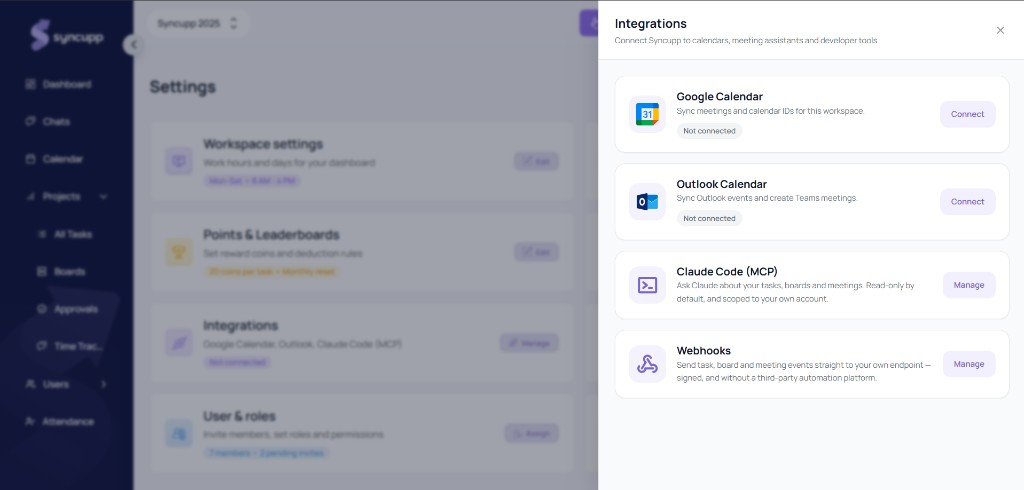
Google Calendar & Outlook Sync
- Navigate to Sidebar → Settings → Integrations (app.syncupp.com/your-workspace/settings (opens in a new tab)).
- Click Connect next to Google Calendar or Outlook Calendar to link your calendar account.
- Every task assigned to you with a scheduled due date automatically syncs directly to your daily personal calendar.
AI connector & Webhooks
Syncupp integrates with developer workflows and external automations:
- AI connector: Connect Claude, Cursor, ChatGPT desktop, Codex, VS Code, or Windsurf using the AI connector guide.
- Webhooks: Send signed task, board, and meeting lifecycle events directly to your server or webhook receiver without needing middleman tools.
Webhook Event Catalog
| Event | Trigger Condition |
|---|---|
task.created | Dispatched immediately when a task card is added to any board. |
task.updated | Fired when title, description, assignees, dates, or priority changes. |
task.completed | Emitted when a card moves into a designated Completed column. |
task.deleted | Triggered when a task card is removed. |
board.created | Fired upon creating a new workspace project board. |
board.updated | Emitted when board metadata or settings change. |
meeting.created | Sent when a new team meeting or calendar event is scheduled. |
meeting.updated | Fired when meeting time, attendees, or agenda updates. |
HMAC-SHA256 Signature Verification
Every outbound webhook delivery includes authentication headers so your backend can cryptographically verify payload integrity:
POST /your-webhook-endpoint HTTP/1.1
Content-Type: application/json
User-Agent: Syncupp-Webhooks/1.0
X-Syncupp-Event: task.completed
X-Syncupp-Signature: t=1756108800,v1=5f2b9c79...
X-Syncupp-Delivery: 3fa85f64-5717-4562-b3fc-2c963f66afa6
Node.js Verification Example
const crypto = require('crypto');

function verifyWebhook(rawBody, signatureHeader, secret) {
  const parts = Object.fromEntries(
    signatureHeader.split(',').map((kv) => kv.split('='))
  );
  const timestamp = parts.t;
  const expectedSig = parts.v1;

  const payloadToSign = `${timestamp}.${rawBody}`;
  const computedSig = crypto
    .createHmac('sha256', secret)
    .update(payloadToSign)
    .digest('hex');

  return crypto.timingSafeEqual(
    Buffer.from(expectedSig, 'hex'),
    Buffer.from(computedSig, 'hex')
  );
}